The importance of ‘getting away’ – our first Pathfinder family holiday
By Jenny McCabe 31/03/2026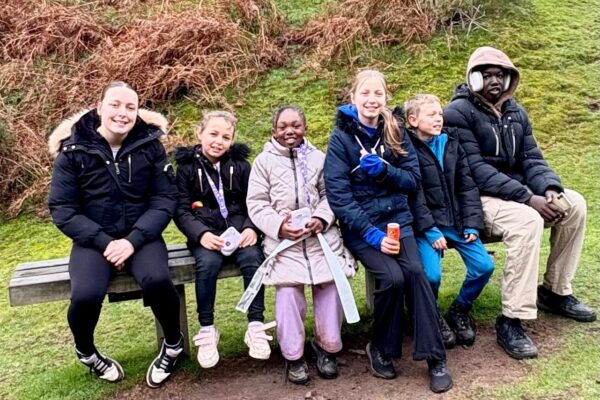
Just before Christmas, we were able to take a group of our families away for a weekend break in the Shropshire Hills. This was a first for our organisation, and was made possible by funding from the Family Holiday Charity whose mission is to make holidays and tourism more accessible to more people.
First and foremost, I want to tell you about how the weekend was joyous, hilarious and brilliant fun. We work with families who are facing multiple, and complex adversities, for whom time away from the problems they are facing is precious, and so this alone would have been enough. But the weekend was also moving and thought provoking for us at the Birmingham Pathfinder in a number of ways, all linked to the missions of these two partner organisations. I’ll come on to this shortly.
We stayed in the Long Mynd hotel, which is run by HF Holidays, a members owned cooperative who exist to provide their members with opportunities for walking holidays that focus on ‘alltogetherness’ in the great outdoors.
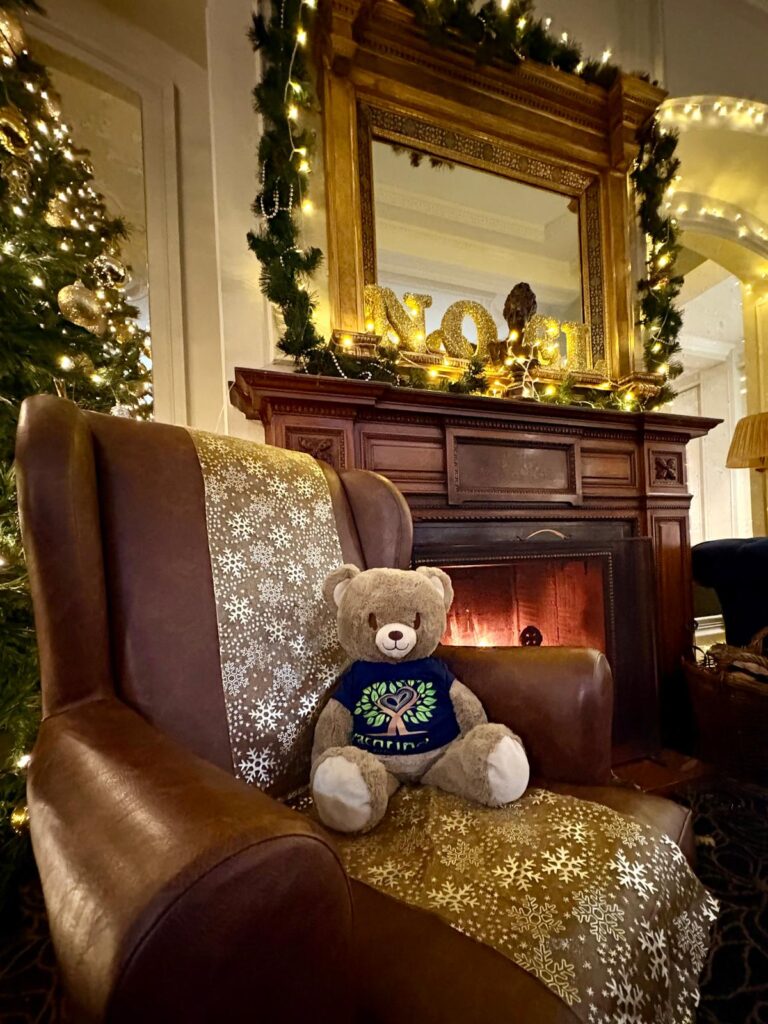
The Long Mynd is run as a walking retreat in its everyday life, but for one weekend in December it became a wonderful cosy Christmas retreat for our Pathfinder families and staff. It is a beautiful white turn of the century hotel which began its life as a hydrospa. During the war it performed a stint as a sanitorium for wounded soldiers, in particular, those who had been blinded, and there is a lovely tale about a long rope being set up all the way down the hill to Church Stretton town, to allow those soldiers some independence in making their way to the pub of an evening.

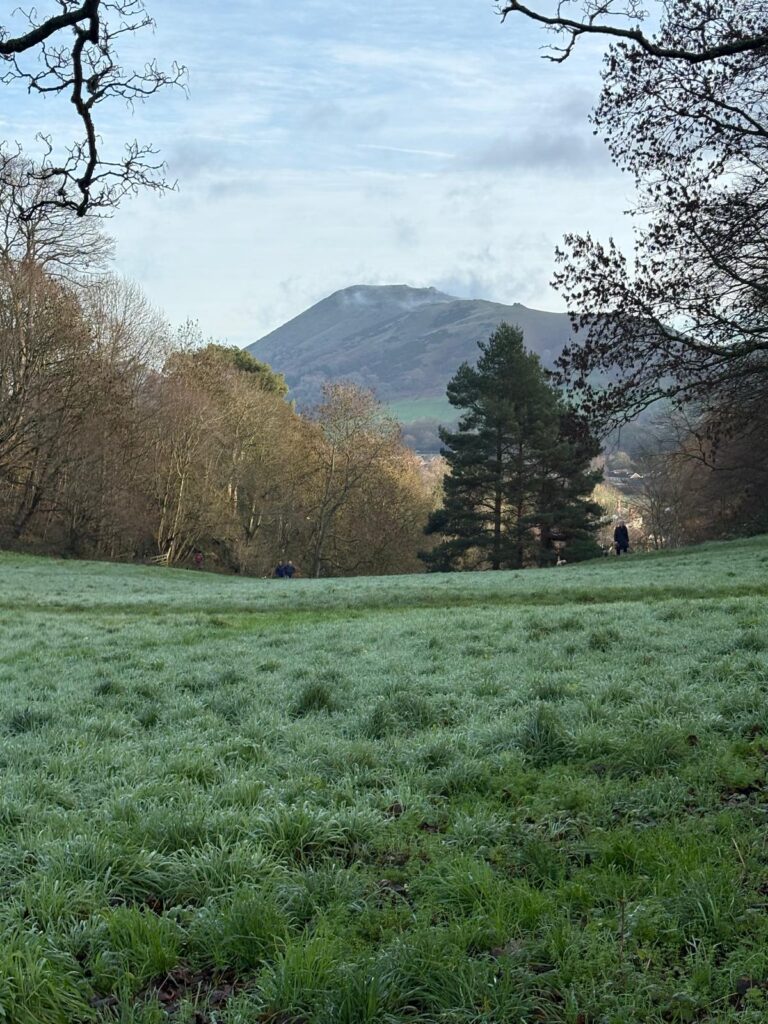


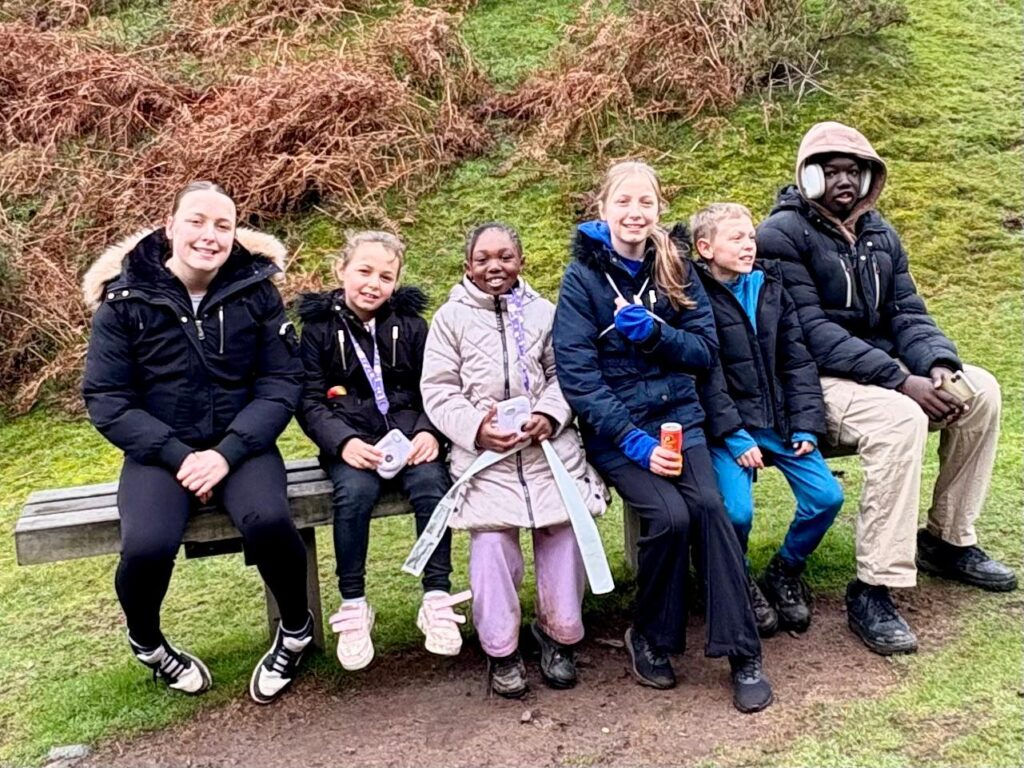
We managed to pack a huge amount into our weekend. We went on a guided walk up to Carding Mill Valley, which was thankfully passable as the flooding from earlier in the week has receded. Despite our guides offering several optional shortcuts, the whole group opted to stay together and took the longest route – which worked out as 5 kilometers or more – impressive given that some of our group were very little and some of us bigger ones were not exactly spry. Later, a second contingent had a tour round Church Stretton town, generally agreed to be one of the most picturesque little towns people had ever seen!
Much of the rest of the weekend was spent in Christmassy activities arranged by our fantastic Pathfinder staff team: gathering holly and ivy and wreath-making, a treasure hunt and a disco. However, the most popular activity all of was run by the kids – a game of hide and seek, with required participation by the adults. By the end of the game several small children and one of the smaller members of staff had at different points managed to crawl successfully under the hotel’s huge Christmas tree to hide. There was also a visit from a certain festive gentleman, who brought gifts and hugs (but also caused some consternation amongst the children that he might be working too hard, and needed to work on improving the portliness his belly).


Speaking of food, the weekend was not the place to watch your weight – the hotel kitchen, clearly geared up for very hungry walking parties – did themselves proud. They accommodated all kinds of dietary requirements with ease and grace, and the only complaint heard from the dining room was that perhaps the portion sizes might be a little TOO big!
All of the staff of the hotel were wonderful: warm, welcoming and fun – even providing spare walking boots, for those who needed them, and taking it all in good humour when some of the younger children became obsessed with going down to the out of bounds (and therefor forbidden and mythical) ‘minus one’ in the lift!
Organising a group holiday for our families is something we have long talked about at the Pathfinder, and we were delighted to be finally able to do it. One of the criticisms that we come across in doing our work is related to a scepticism about spending money on anything for our families beyond the bare necessities. A classic example is the insistence on the provision of vouchers – people often expressing concern about what families might otherwise spend cash on.
However most would also agree that everyone needs a break – often going away allows us to ‘meet ourselves anew’ away from the context of our everyday lives – is a time for gaining some perspective on problems, making decisions and resolutions, thinking about how to make changes in our lives. It’s also a time away from all of the background noise of everyday life, especially from repetitive tasks and duties can otherwise feel never-ending, and from everyday reminders of problems and worries.
The provision of time away and breaks is therefore even more important for families who are struggling with adversity. Not only do the adversities that they are facing mean that they desperately need a break, but they are also the people typically least able to able to afford the rising cost of taking even short breaks away.
But there was more to our weekend than a really fun weekend break and a much-needed chance to get away for our families. What really got us thinking though, was what we saw growing around the edges of the fun and in the spaces between activities. When they arrived at the Long Mynd, none of the group of families knew one another. There were no formal ice-breakers or teambuilding exercises, and yet warmth and familiarity grew so quickly, that by the second night it felt like a big sleepover with extended family. We wondered about this – was it a sense of already being part of the Pathfinder, so that they already belonged to something, and shared its values? Was it the knowledge, even before stories had been shared, that everyone there shared some kind of struggle against adversity that meant there was so little need for pretence or judgement? Was it that shared experience of adversity lends itself so often to a no-nonsense approach to getting to know people, and to a sense of humour that quickly dissolves both pretensions and anxiety?
The weekend was a real luxury for families whose everyday lives contain more difficulty and struggle than most people’s, but what we saw and experienced wasn’t so much consumption of that luxury as a commodity, it was the emergence of conviviality[1]. Smaller guests were taken care of by older children, or swept up by adults from other families, so that single parents could relax and talk. People shared sad and difficult experiences without either embarrassment or drama, and by the end of the weekend, new friendships had been forged and contact details were being swopped.
One family member, a single mum, expressed what the weekend meant to her:
“As a person who is extremely anxious, and feels judged (as I’m quite young as a mom) and didn’t know anyone, I went from even contemplating not going in the first place to ending up having the absolute best time, to being able to reassure other people in the future that this is one of the best decisions both mentally and physically. It gave me a sense of relief: it’s the Christmas period everything’s stressful. It gave me a break and from going there and knowing no one I went to playing games with everyone downstairs till late, barely being in my room so we could socialise, and even my son who’s the youngest, I went from thinking he won’t leave my side to him never wanting to come back with me and being gone with all the other older kids 90% of the time, leaving me to play cards with the other parents or relax. It was great.”
Another parent, a single father, described the unexpected pleasure of being able to talk openly about the challenges facing him:
“As a single father I believe there aren’t many others in my position and of those who are, most would prefer to keep their story to themselves and get on with it as was the case with myself. However taking part in this trip was an eye-opener and showed me it’s good to be more open sometimes. Hopefully telling my story will encourage others like me to participate in the future.”
One mother, who is terminally ill, was relieved that going on a group holiday at Christmastime would take some of the weight off her shoulders of having to take care of her children and entertain them by herself. She called it a ‘once in a lifetime opportunity’.
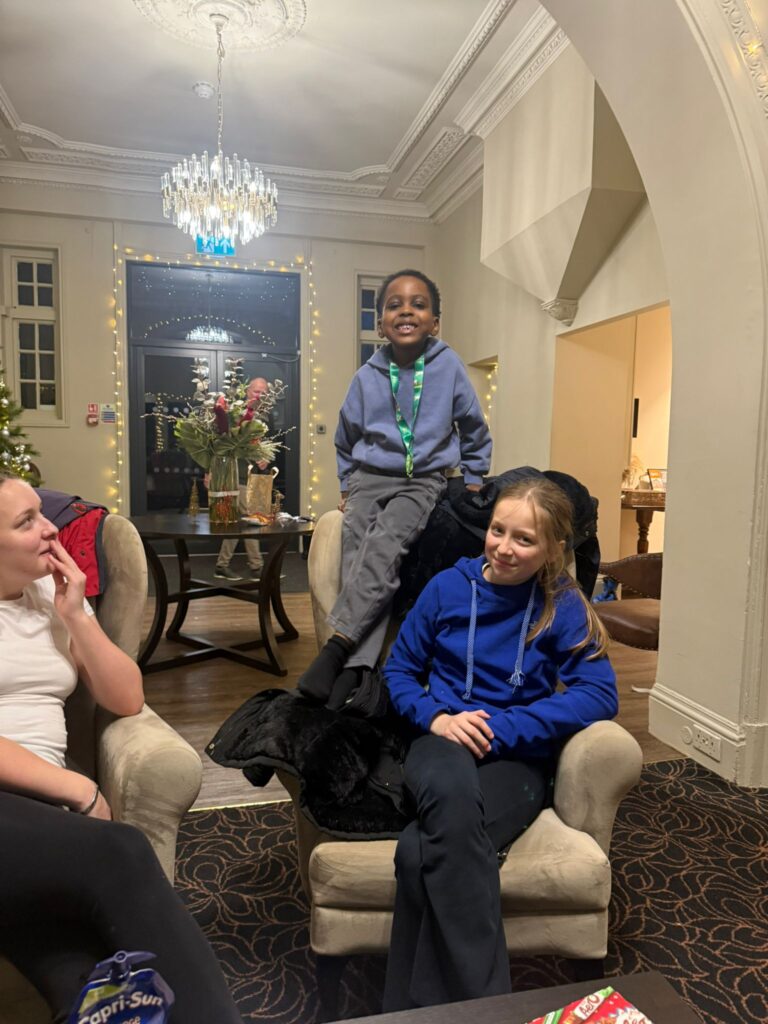
Those of us who were there in some more professional capacity felt it too: although our role was a bit different, there was a special sense of togetherness and family amongst all of the workers, families, and staff from both organisations.
Our core work at the Pathfinder is in providing long-term support-on-tap to our families, to help them navigate the complex issues and problems that they are facing, but it has always been the case that our value of ‘shared authority’ is reflected in wider and deeper aspirations for our families than simply overcoming adversity. We want more for them than ‘negative freedom’, we want positive freedom: freedom to follow the human desire to contribute and to find and fulfil one’s purpose.
The weekend has sparked some interesting conversations between us at the Pathfinder and staff from the Family Holiday Charity about how to ‘bottle’ what went so well at the weekend, so that we can build on it for other families. We have also wondered together about how to deepen the involvement of the families themselves in future such breaks, finding ways to build in even more opportunities for the participating families to take an more active part in organising these events, to build skills and networks that extend beyond the holiday, and to grow and nurture an even deeper conviviality.


[1] By ‘convivality’, I mean it in the sense that Ivan Illich did in his 1973 book, ‘tools for convivality’: ‘…autonomous and creative intercourse among persons, and the intercourse of persons with their environment; and this in contrast with the conditioned response of persons to the demands made upon them by others, and by a man-made environment. I consider conviviality to be individual freedom realized in personal interdependence and, as such, an intrinsic ethical value.’
About the Author

Jenny McCabe
Jenny works closely with Cathy, Rob and Hollie, providing support with things that need to happen in the background, like fundraising, comms, our website, and general plotting and scheming to help and support the team be able to carry on providing amazing support to our families.
Jenny’s background is originally in environmental work: she’s done everything from environmental youth work at a city farm, to working in Birmingham City Council sustainability team gathering data on carbon emissions. More recently she re-trained as a science teacher, and now, when she’s not working for the Pathfinder, she is teaching part-time at Elmfield Steiner school in Stourbridge.
When not at work, Jenny’s favourite place to be is in the garden, or the allotment or walking up a hill. Either that, or on the sofa with the cat, arguing about which movie to watch with the kids.
Our News
View All
Jean Templeton joins the board of Birmingham Pathfinder CIC


Get in Touch